


If you’re a Dungeon Master and you’re thinking about picking up the recent Arcana Unleashed book for your 5th edition game(s) then you’ve come to the right place. What follows here will be a spoiler-free review of the content, starting with an overview and buy/don’t buy judgment and then going into a deep dive into the contents (still without spoilers) of each of the book’s main sections (okay I spoil the chapter names, sorry).
If you’re not a Dungeon Master you should close your browser right now. I promise not to tell your DM that you tried to peek at this information. We already wrote a review for you. Go read that. I’m not messing around here. You do not want to get smitten (smote?) by your Dungeon Master because you thought it’d be fun to read about the new evolving magic items rules, or the construction of magical factions and their effects on renown and bastions.
This is your last warning. If you love any of your character’s magical items, and don’t want to see them stolen by a master thief who was mysteriously tipped off to your location, close this browser now, read the player’s review, and be happy you stopped here. You’ve been warned.
Okay, now that all the players are gone, let’s chat, DM to DM. If you run games in any kind of high-magic setting, so places like the Forgotten Realms, Eberron, and perhaps the upcoming World of Warcraft, to name a few, then this book will have a lot of options for you to add more excitement to your campaign and your own world building.

Outside of the character options, spells, and items, there are three main features here for a Dungeon Master looking to flesh out their game. They are magical patrons (who is the party working for), magical factions (who is pulling the political strings in your world), and evolving magical items (items that grow with your players over the course of a campaign).
If you want to know more, then please read on, but if you think that describes you and your games, then I highly recommend checking out Arcana Unleashed and seeing if it is a good fit.
Now, on the other hand, if you’re running more of a low-magic kind of game, such as a campaign in Ravenloft, maybe Greyhawk, and definitely the upcoming Dark Sun, then this is a fun book to have but you won’t get much out of it. Your players aren’t going to come across a ton of magic items, let alone near-artifacts that evolve over time. They likely don’t have some benevolent archmage paying them to go on adventures. And the politics of those worlds have little to do with magic and more to do with the traditional kind of politics.
So while I think Wizards did a good job with Arcana Unleashed, it definitely isn’t for everyone. It does pair very well with the companion campaign, Arcana Unleashed: Deadfall, which we’ll have a review for next week. So if you don’t have a campaign going yet, and you think the high magic idea appeals to you, come back next week and you can decide if you want to pick up both Arcana Unleashed and Deadfall.
Without further ado, let’s dive into the parts of the book.
Character Options & Spells
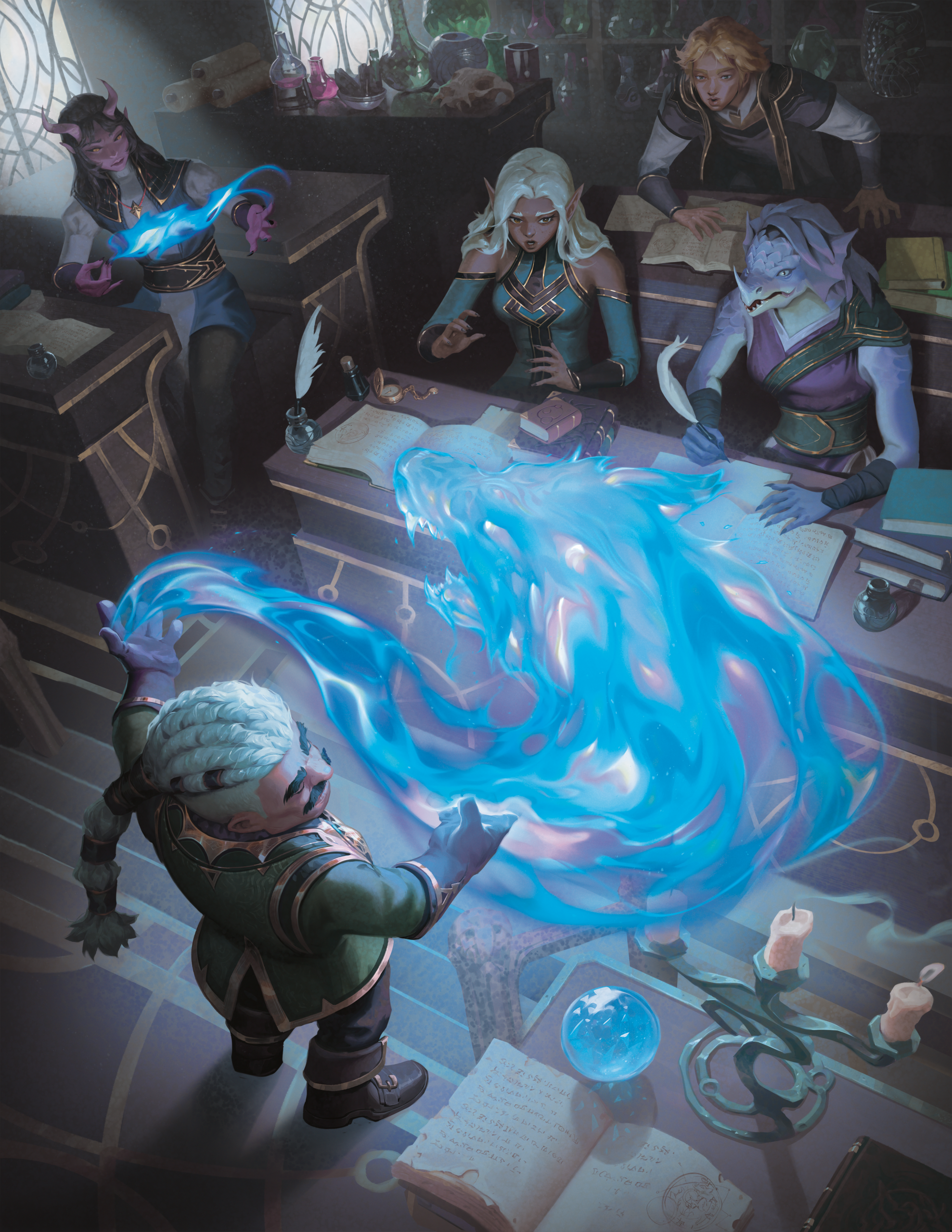
Let’s start with the boring stuff, the player options. I went into these in my review last week for players, so I’ll quickly cover what you need to know as a DM. You’re going to be looking at eight new subclasses your party will have access to, though they only cover Cleric, Fighter, Monk, Warlock, and Wizard (which gets four new subclasses). I’ll rank them from least to most interesting and you can figure out if they’re a good fit for your players:
- Transmuter (Wizard): This is a great NPC subclass, but a polymorphing Wizard is a weird choice for an adventurer.
- Arcane Archer (Fighter): Why isn’t this a Ranger subclass?
- Enchanter (Wizard): Remind your players you’re never going to fail a save against Charm Person and they should just pick something useful.
- Vestige Patron (Warlock): If your Warlock wants an animal companion, check this out. Or tell them to play a Druid.
- Warrior of the Mystic Arts (Monk): It’s like Bladesinger but for punching!
- Arcana Domain (Cleric): I don’t think Power Word Kill and Power Word Heal were meant to be used together…
- Conjurer (Wizard): This isn’t the most interesting objectively, but I love summoners in every way, shape, even though I know it can be a nightmare for DMs to manage all those extra entities in the initiative list.
- Necromancer (Wizard): If you let your player’s pick this, they will be murdered in broad daylight by the party’s paladin, I guarantee it.
You can get my thoughts on the backgrounds and feats in the player’s review. For planning your NPCs out, I will say definitely look at the Wizard subclasses and then all the interesting spells you can use to give them unique abilities like Catnap.
Creating Magical Worlds & Magical Factions
If you’re building your own D&D setting, these chapters can help you out with ideas for how to seed that world with magic. It also covers how magic interacts with technology, a legal system, economics, warfare, and education. Everything you need for whatever curveballs your players throw at you is covered here. That’s not to say you need Arcana Unleashed to figure that all out, but if you’re struggling or just need a bit of inspiration or prefer a nice blueprint, it’s not a bad guide.
On a more micro level is the group patron guide. Having your players start their adventures by being hired by a mysterious but powerful mage who needs some esoteric piece of arcana is a tale as old as time. But if you want to make that mystery patron truly memorable there’s a ton of inspiration here. Maybe it’s a hidden archmage, or a college of wizards, or an archfey who couldn’t be bothered to get their warlocks to do their dirty work (or the warlock is in your party).
Pulling back out a bit are magical factions. If your world has magic, odds are some of its users/academics have formed a club to talk about it on Tuesday nights over pints at the local pub. Before you know it you have globe-spanning magic guilds and other organizations trying to manipulate or protect or exploit everyone on the planet. Fun!
These sections are definitely something you can get from a lot of different places. A lot of different 5th edition supplements cover some or all of these topics, and plenty of games that are more focused on world-building (e.g. Fabula Ultima) have these concepts baked into the rules from the start. But, if you want a Dungeons & Dragons feel to it (which means larger than life heroics) and you don’t want to go to far to get it, you could do worse than using Arcana Unleashed for the magical details of your settings/worlds.
Magic Items & Magical Creatures
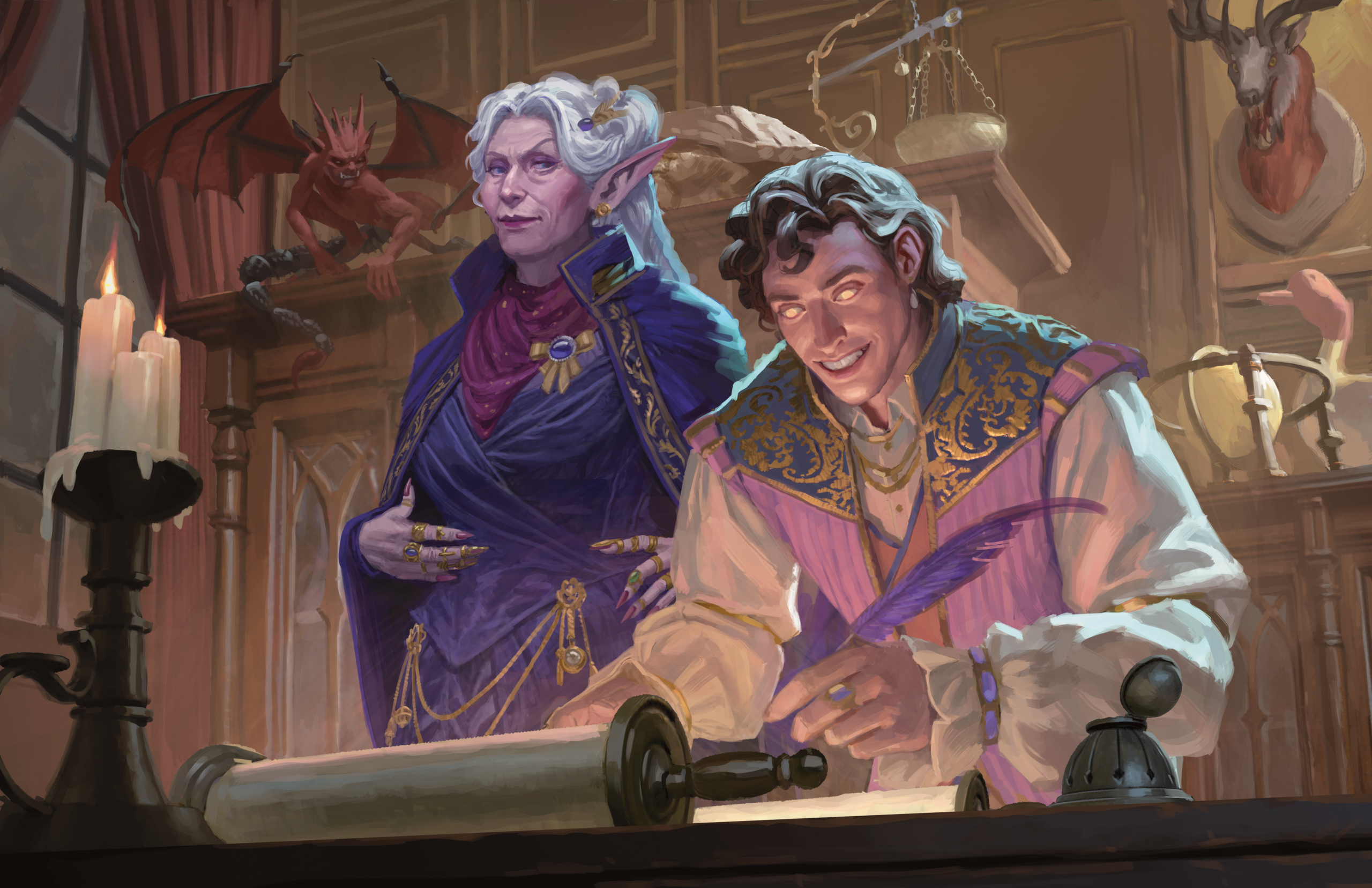
The items and creatures are simultaneously the most mundane but also one of the most useful parts of the book for DMs working through their own home-brew adventures and settings. After all, you need monsters to populate your dungeons and treasure to entice your party. That’s true if you’re in Faerun or Barovia. But, you can get items and creatures anywhere. The DMG already has plenty. A lot of sourcebooks exist, some from Wizards and plenty more from other publishers, that are chock full of items and monsters.
So what makes Arcana Unleashed special?
First is the rules to evolve a magic item. I covered this in the player’s review but it’s worth revisiting. The basic idea is straightforward. You give you players a common magic item (or whatever base rarity is appropriate) and as they level up they can evolve the item. You’ll want to make them complete some kind of quest for it, so don’t give like, five of these to one player, unless that’s the whole campaign. But this is a good way to give each player a signature item that they can carry with them from level 1 to level 20.
The second is the rules for living spells. Basically you can take any spell, levels 1-5, from the Wizard, list, and use a few guidelines and a template to turn it into a living spell. More often than not you can use these as monsters in magic-infused dungeons. As shown on the D&D live play show they also work to great effect as traps. A great option is the Enervation spell, originally published in Xanthar’s Guide to Everything and updated for D&D 5.5 in Arcana Unleashed.
Appendix: Tomb of the Shadow Serpents
At the end of the book is a level one adventure that highlights a few key ideas that Arcana Unleashed has now presented to you:
- A mysterious patron who is secretly a powerful magical NPC hires the party
- The party is already part of a faction and the patron is giving them the opportunity to thwart a rival faction
- A classic dungeon crawl with a rare wondrous item at the end
This is a common part of a lot of the D&D supplements as Wizards works to appeal to a broader audience and overcome the challenge of turning more players into DMs. We need more DMs, so there’s nothing inherently wrong with it.
Tomb of the Shadow Serpents is even set up in ways that can be directly used as a launching point for a campaign, with advice on how to build around it, and how to work other pre-made adventures into the narrative setup as well. If you’re new to being a DM, or just looking for some inspiration for a quick one or two-session dungeon, there’s a lot of appeal to this one.
And if your party is higher level you can always scale up the challenge accordingly (check out the Dungeon Master Guide obviously).
I wouldn’t pick up Unleashed Arcana just for this adventure, but if you are already thinking of getting it for other reasons, and want an easy way to start things off, this is as good as any.
Final Thoughts
Like I said at the top, I think you can see who this book is and is not meant for. If you’re still on the fence, or don’t have a campaign to apply this book to, come back next week for my review of Deadfall and see if that sways you one way or the other. In the meantime, my 9yo and her friends are about to hit level 3 in a few sessions and in addition to gaining their subclasses I’m tempted to put them each on a personal quest that will award them their evolving magical item. Wish me luck!
Rich Stein (He/Him) has been playing Dungeons & Dragons since he was a teenager during the twilight of Advanced D&D’s era. He currently DM’s a monthly game for his 9 year old and plays Fabula Ultima. He’s very excited for the recent Hackmaster XXV Kickstarter campaign.