


Arcana Unleashed is finally upon us as D&D 5.5’s latest supplement(s) hit the street today. If you’re wondering what the book is all about, well it’s right there in the name: the arcane has been unleashed. Okay, you need it spelled out for you? We’ve got magical subclasses, magical backgrounds, magical worlds, magical patrons, magical factions, magical items, magical creatures and of course, some new magical spells (is that redundant? are there non-magical spells?).
Where to begin? It can be daunting but if you’re a player then odds are you’re really only going to be interested in the first two chapters: character options and spells. The rest of the book is really for dungeon masters, so no peeking. Okay you can salivate over the magical items but don’t get greedy. It’ll be more fun to learn about magic items that evolve through your character’s experience. Cripes, I’ve already said too much.
If you’re a player, then this review is for you! If you’re a dungeon master, you’ll want to read this, and also check out or review (for Dungeon Masters) which comes out next week.
If you can’t be bothered to read on, I’ll give you my quick summary right up front. If you like magical characters then you’ll get a decent amount out of the character options in this book. The backgrounds, subclasses, and feats give you a pretty large sandbox to make various arcane-focused characters, whether you’re playing a wizard or not.

There’s also some great synergy with other books. If you want to be a devotee of Mystra for example, you could take the spellfire origin from the Forgotten Realms guide and the Arcana Domain from Arcana Unleashed. If you want to be a real beast in Ravenloft, you could take the Haunted One background from Ravenloft: The Horrors Within, and the Transmuter subclass to turn yourself into an actual monster!
The possibilities are truly endless. If you want more details on what’s in Arcana Unleashed, read on!
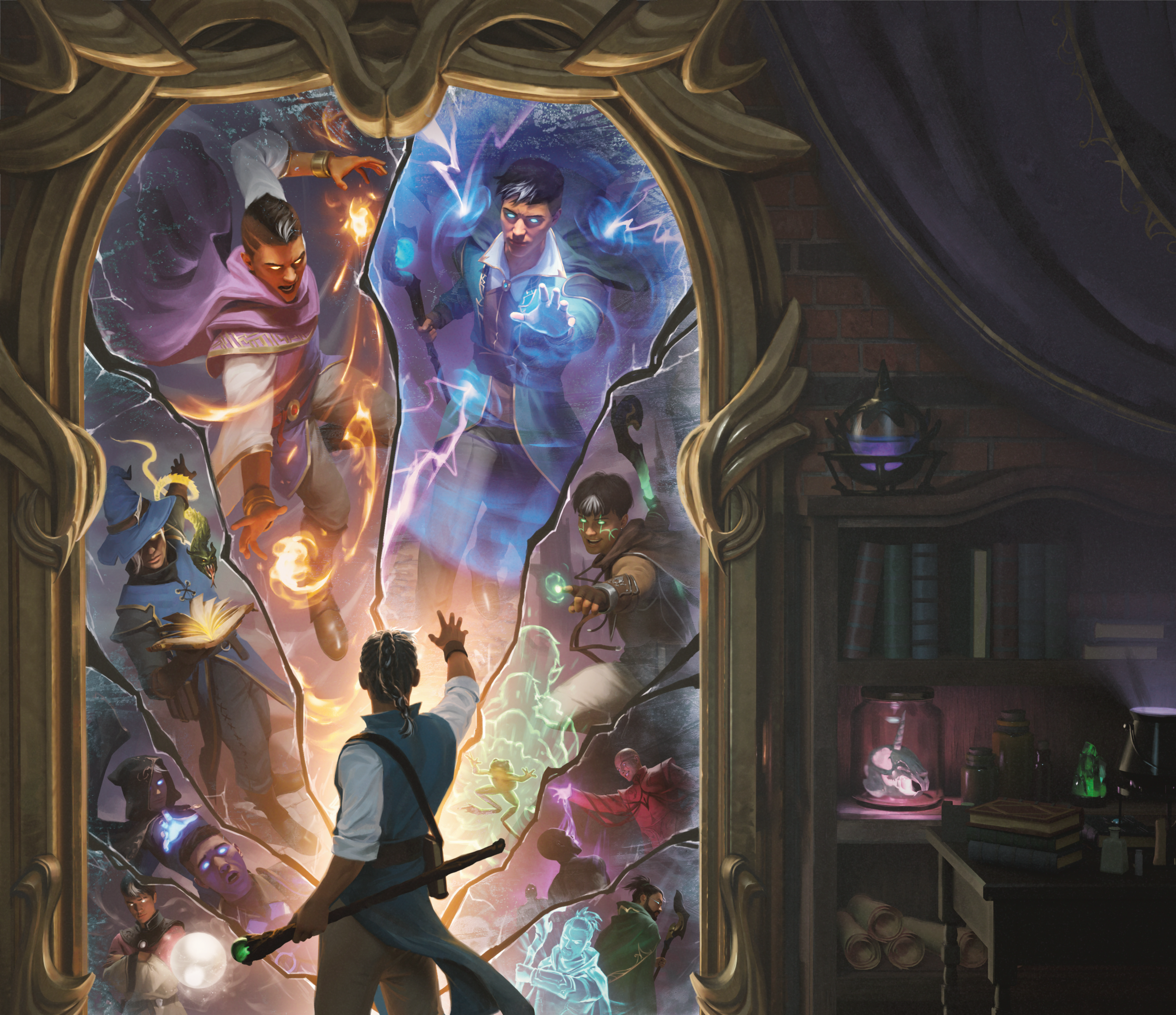
Illustrated by Billy Christian
Subclasses
There are eight subclasses in Arcana Unleashed and four of them are for the Wizard class. I suppose that’s to be expected when the book is all about arcane magic. The four Wizard subclasses are each focused on a different school of magic: conjuration, enchantment, necromancy, and transmutation. The other four subclasses are for Cleric, Fighter, Monk, and Warlock.
I think each of the subclasses has fascinating abilities and unique depth to them and you’ll probably enjoy any of them. Arcane Archer was a favorite of mine in 3rd edition and always evokes images of stealthy elves from World of Warcraft (ooh is there some crossover potential there?). However, I have one burning question.
How did they just publish a massive Ravenloft book and then save the Necromancer subclass for Arcana Unleashed? That really seems odd to me, as Necromancer would be a better flavor fit for the horror setting.
I’m also very fond of the Conjurer subclass which… huh… actually feels a lot like summoners from World of Warcraft… I’m sensing a theme.
Backgrounds
Ten new magical backgrounds grace Arcana Unleashed and allow you to really craft a more fascinating history for your arcane characters than the usual “I grew up in a monastery” or “I grew up studying magic” or “I grew up with a bunch of other druids” stuff that’s in the Player’s Handbook.
Nine of the backgrounds have an affinity with one of the magical organizations that are in the DM’s section of the guide. You can likely get enough sense of the faction by reading the origin description and feat. There’s magical thieves, magical spies, magical uh.. cultists… magical necromancers, magical meteorologists, magical hippies, magical circus performers, magical prophets, and magical food kitchen organizers.
The tenth background is like something out of a children’s fairy tale where you bonded with a familiar as a child and now its your best friend and there’s a whole bunch of feats you can use to make it super awesome. Honestly if you ever wanted a companion like druids get but the fun of literally any other arcane class (I bet if you pick Warlock your patron won’t mess with your familiar at all).
Feats
Excluding the origin feats that come with the backgrounds (above) there are 15 general feats, 3 epic boons, and one fighting style. The general feats mostly cover three flavors: spellcasting school adept, modified familiars, and “other.” The adept feats give you five levels of “always prepared” spells from the school’s list while the familiar feats let you modify a familiar (but only if you took the familiar friend origin feat previously). I like the idea of a familiar-focused spellcaster especially since it almost turns your feats into a second subclass.
The epic boons are actually really good and cover a wide range of arcane builds including damage dealing, concentration focus, and school focus. Definitely check those out if you’re thinking of a character build that will reach level 19.
Spells
What book of the arcane would be complete without some new spells? Arcana Unleashed brings 33 new spells to D&D 5.5e from level 2 to level 9. My personal favorite is the new level six Druid spell Summon Dinosaur. Can you guess what that does?
My award for most poorly named spell is Mordenkaininen’s Lucubration. Yeah, try saying that three times fast. Also I definitely misread it the first time. What I thought it said may end up in the upcoming 18-and-older Dark Sun setting.
Overall I think the spells are fine. The ninth level spells are kind of a let down, to be frank. They have very niche application. Overall the spells are a good addition, and the book is really about other aspects of the arcane than actual spellcasting.
Magic Items
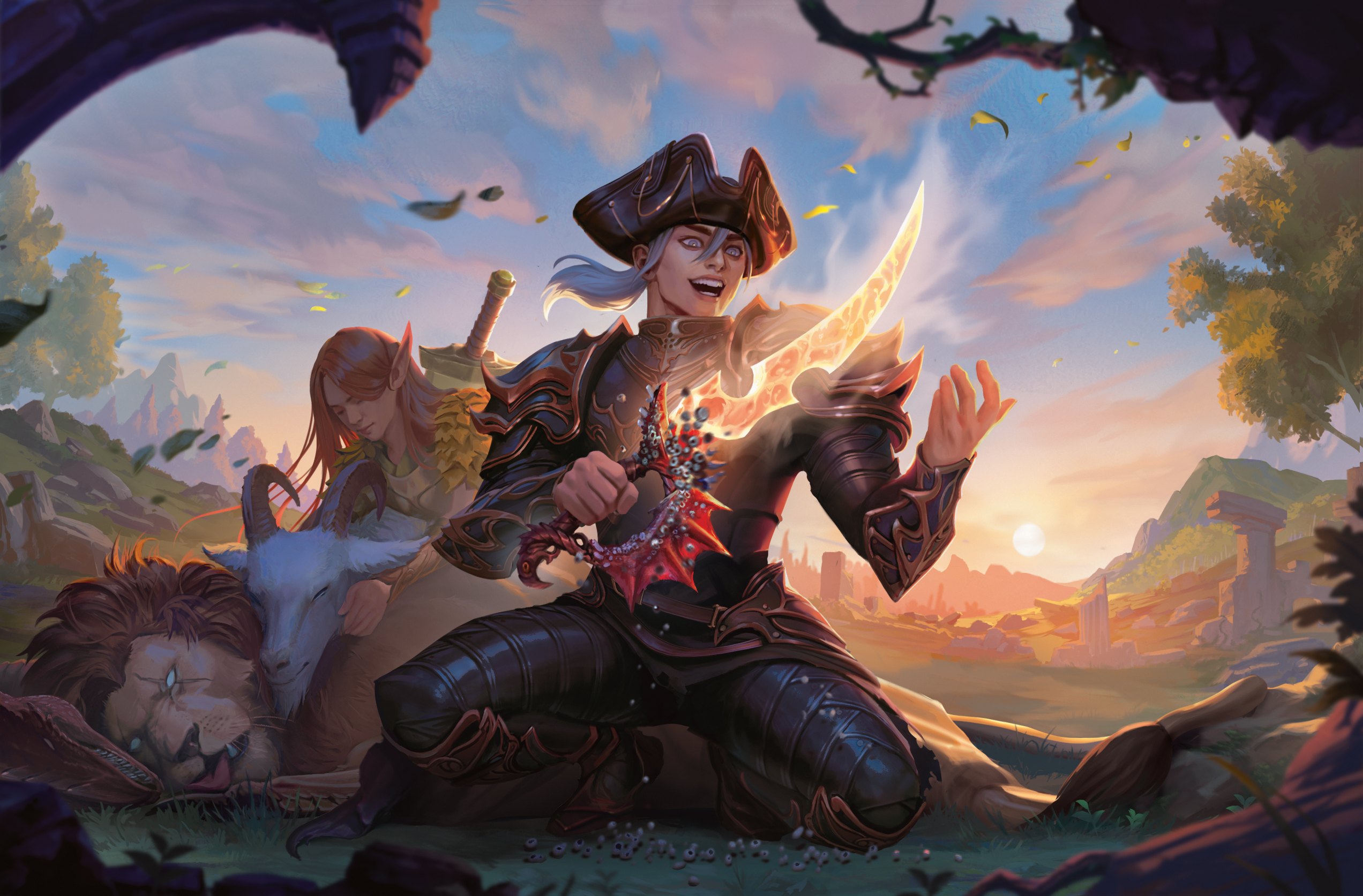
Aquatic Wave-Swept Weapon, Illustrated by Ina Wong
Are you kidding? I told you that this stuff was for your dungeon master, not for you. Why are you still reading this?
Okay, I’ll throw you a bone. The rules for evolving magic items are for your DM but they’re worth knowing about so you can have an informed conversation when you beg for the blessings of Mystra to grant you one of these sweet, sweet items.
Essentially, this system is for signature items that you get at lower level that you want to carry with you throughout your adventuring career. A common item can evolve to uncommon and all the way up to legendary (which can’t evolve). Work with your DM on both the abilities and when the item will evolve. Don’t expect to get a lot of these, but if your character has a signature item then this could be a great fit.
Rich Stein (He/Him) has been playing Dungeons & Dragons since he was a teenager during the twilight of Advanced D&D’s era. He currently DM’s a monthly game for his 9 year old and plays Fabula Ultima. He’s very excited for the recent Hackmaster XXV Kickstarter campaign.