


Did you know that Living Wall counts as a wall? Did you know that Lead-Belly Chimera counts as a chimera? Did you know, scandalously enough, that Teeka’s Dragon counts as a dragon?
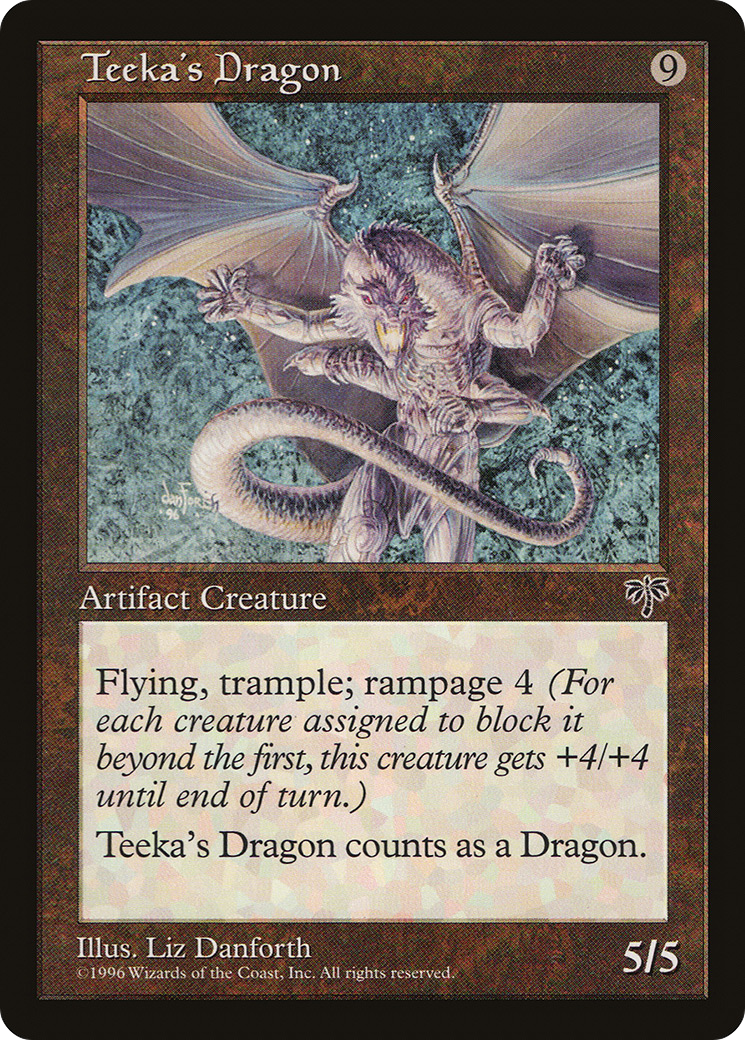
One of many treats that comes from trawling through Scryfall instead of working is that you get to find these strange and seemingly redundant relics, remnants of an older kind of Magic. I remember coming across Living Wall early in my life as a Magic player—building, as is rite of passage for any would-be and will-be lover of odd EDH decks, an Arcades, the Strategist deck—reading the rules text, and thinking: Well, duh. Why wouldn’t it count as a wall?
In one way, there’s a pretty simple answer. Before Magic standardized type lines on cards, Artifact Creatures like Living Wall and Teeka’s Dragon and company didn’t list any subtype; now that creature types have been retroactively standardized, they read “Artifact Creature – Wall,” “Artifact Creature – Dragon,” and so on.

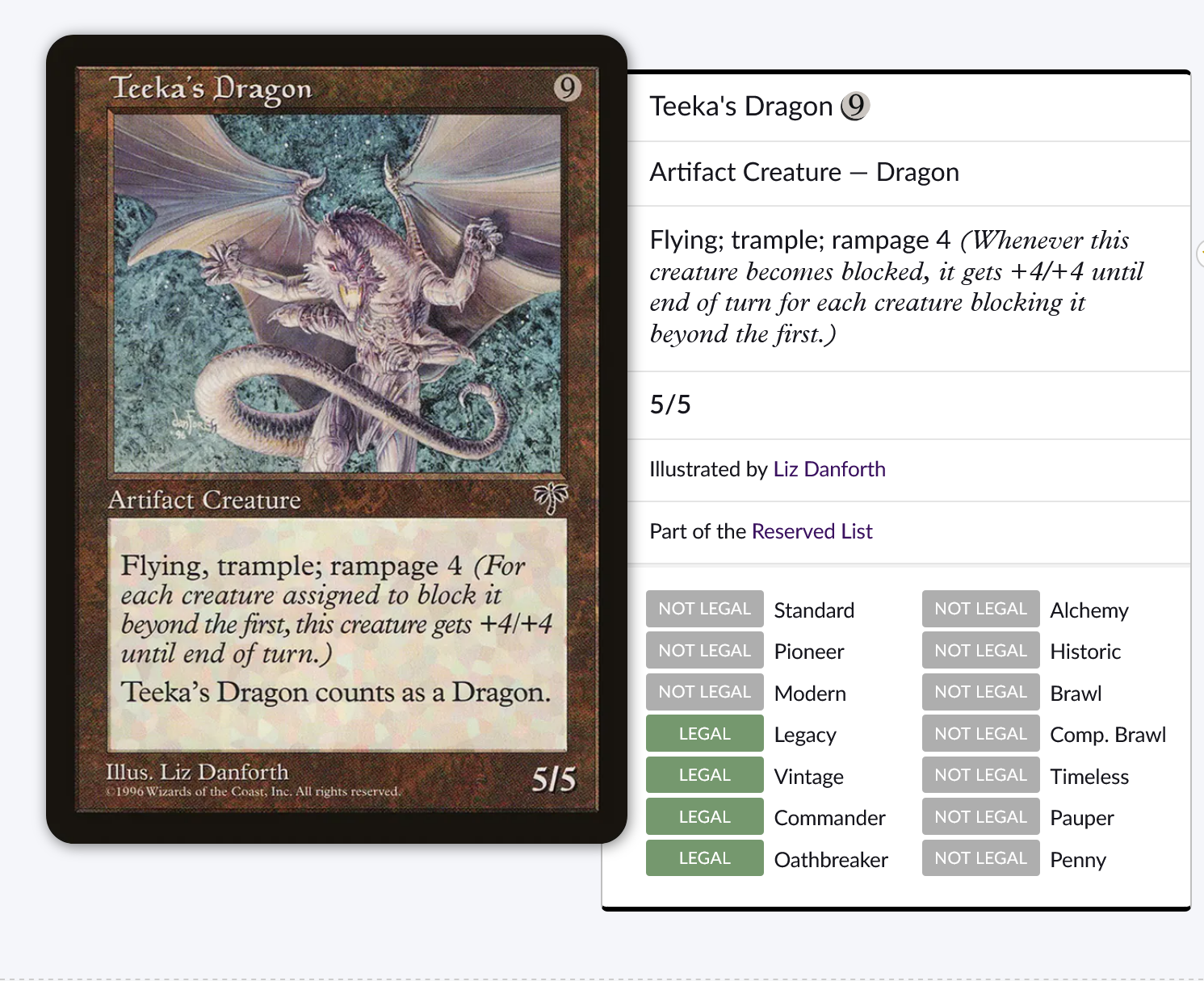
In another way, the answer is endlessly complicated. The fact that the type line could be the site of such strange muddied confusion is telling, in itself, of the uneven processes by which the game’s flavor has crystallized over the past three decades.
Whispered in the gaps between the words Counts as a Wall, there’s a world, a history, and a menagerie, all at once. Inside that little phrase we can detect strained efforts at standardization, and also standardization’s very failures—the strange and the forgotten, the homogenized and the hangers-on, those that are defined by and those that defy Magic’s creature typing system. These are Magic’s forgotten creature types.
Type Before Time
I referred a moment ago to the way that creature types were retroactively standardized. Let me explain a bit more, because it’ll be important: this event, the so-called Grand Creature Type Update, is the Chicxulub Meteorite that reshaped the face of Magic.
Around the time of Lorwyn’s 2007 release, designer and rules manager Mark Gottlieb posted an article to the Magic mothership announcing that Wizards of the Coast would be undertaking a massive errata update on all creatures printed since the game’s origin.
Up to that point, Magic’s creature typing system had been highly uneven, developing in juddery spurts. The first developments groaned along from Magic’s debut to 1998, when creature spells were called “Summon” spells–they were spells that summoned creatures, after all.
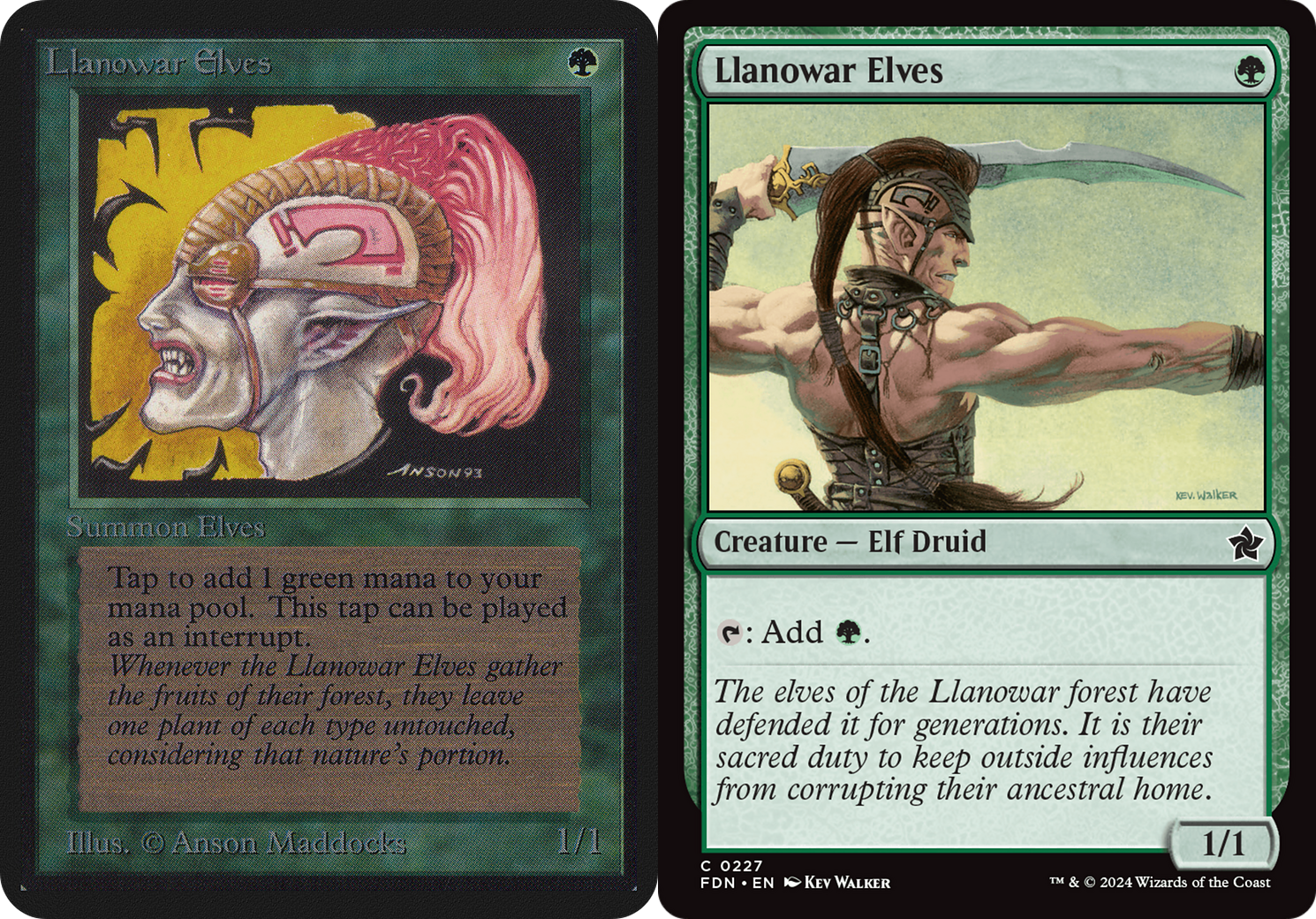
In lieu of descriptive creature types, the type lines on Summons read like a kind of instruction: where the Llanowar Elves of Foundations reads “Creature – Elf Druid,” the Llanowar Elves of Alpha reads “Summon Elves.” I command you, player, to summon some elves!
As Alpha Llanowar Elves bears out, the early type line often drew its “type” from part or all of a creature’s name. Benalish Hero and Bird Maiden was “Summon Bird Maiden,”and Bog Wraigh was “Summon Wraith.” Others got absurdly specific, like Arabian Nights’ Ali from Cairo, whose creature type was, in fact, “Summon Ali from Cairo.” In fairness, there’s probably more than one guy named Ali in Rabbiah’s version of Cairo.
Things became complicated almost immediately, however, by the existence of cards that cared about specific creature types. While “creature type matters” wouldn’t be a large-scale theme until 1997’s Tempest, plenty of cards in Alpha were designed around enhancing creatures of a certain type–like Lord of Atlantis, a Merfolk beefcake whose name originated the slang term for creatures that buff creatures of the same type.
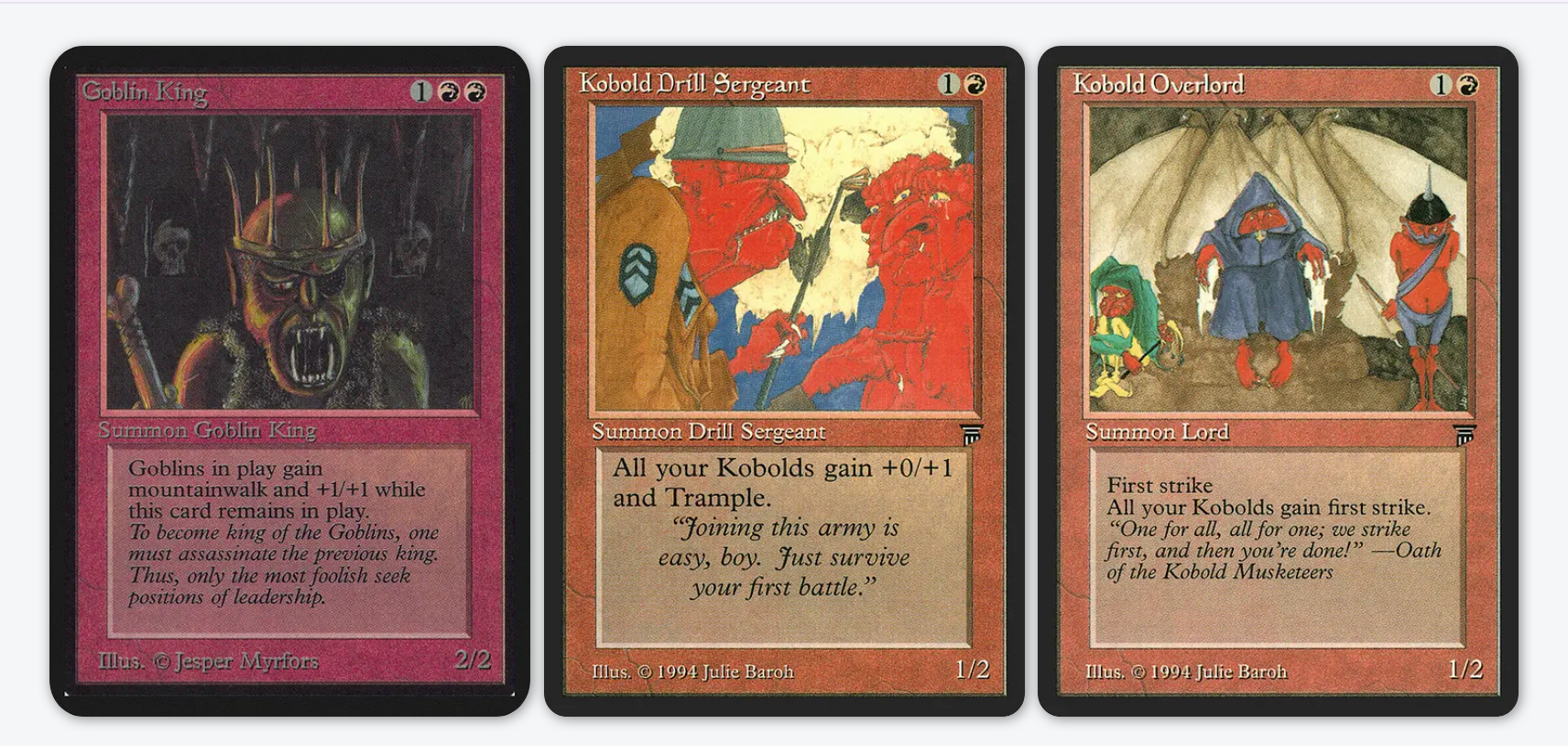
Yet given the loosey-goosey vibe of creature typing, there was inescapable ambiguity: does Goblin King count as a Goblin, even though his type is “Goblin King?” (No). Kobold Drill Sergeant and Kobold Overlord are respectively typed “Drill Sergeant” and “Lord,” but are they Kobolds? (Also no). Here, there’s essentially a gap between art and mechanics that player intuition needs to fill or otherwise bow to: it doesn’t say Kobold Drill Sergeant is a Kobold, but it’s clearly a Kobold.
A few years into Magic’s life, Wizards of the Coast would formally iron out these wrinkles. The first glimpse of the change came in 1998’s start set Portal: Second Age, which broke from convention and labelled creature types in the way we’d recognize today: Vampiric Spirit was typed as “Creature – Spirit” (though not, amusingly enough, vampire). The next year, Sixth Edition’s massive rules change would universalize this format for creature typing, and 2003’s Mirrodin block went further, introducing the now-standard Dungeons & Dragons-inspired “Species-Class” template for creature types. Llanowar Elves became a Cleric as well as an Elf.
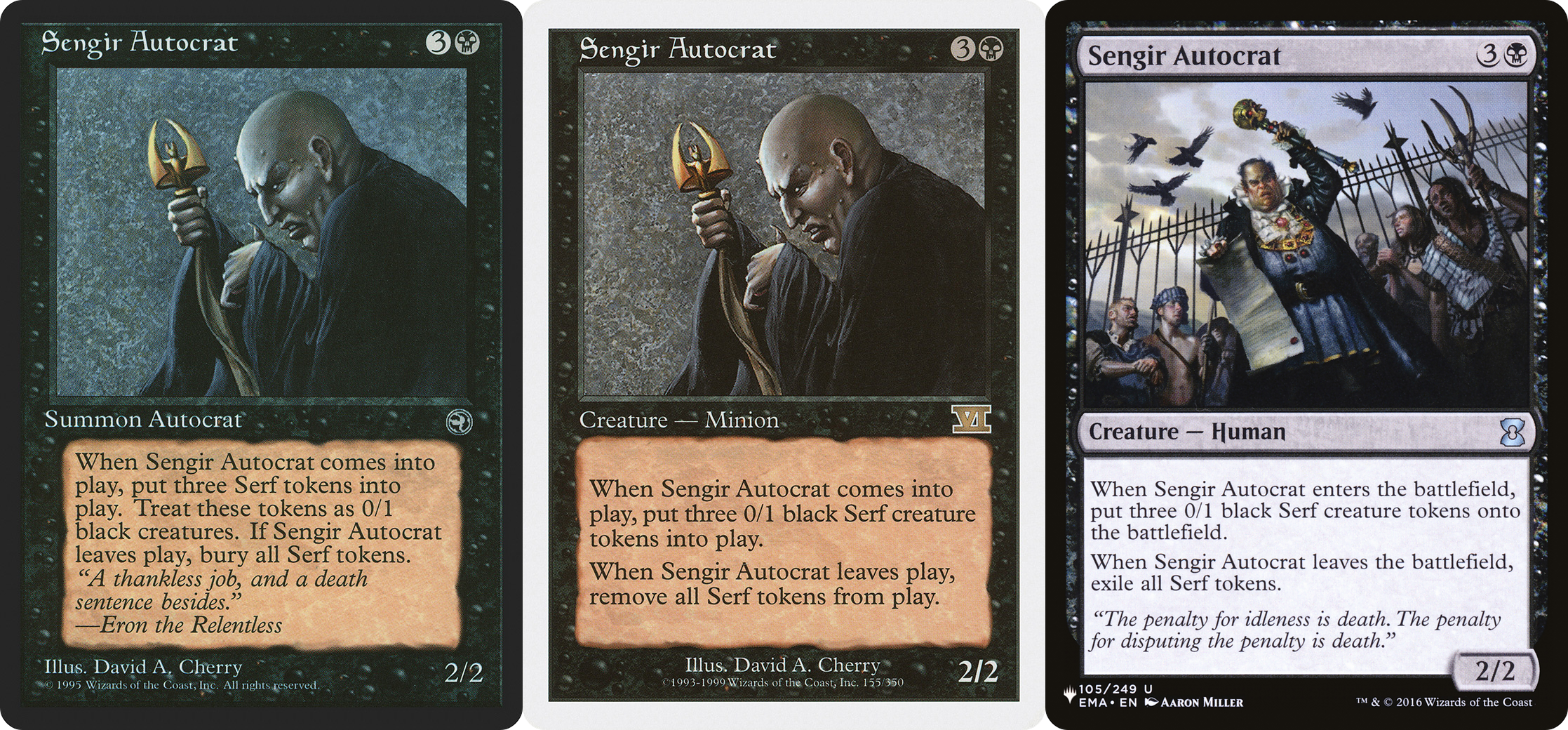
Along the way, creature types were sporadically folded together, errata’d out of existence: Sengir Autocrat changed from “Autocrat” to “Minion” (and was eventually changed again to “Human”), Sabretooth Tiger changed from “Tiger” to “Cat,” and one of my favorite stupid cards of all time, Evil Eye of Orms-by-Gore, changed from “Evil Eye” to “Horror” (it would be changed again to “Eye” in Time Spiral. In 2007, the Grand Creature Type update made a huge consolidated set of changes, changing nearly 1200 cards and obsoleting nearly 150 creature types.
Many were lost in this huge, arguably regrettable, probably necessary change. Abomination and Lord, Hipparion and Maiden. By God, they even got Ali from Cairo.
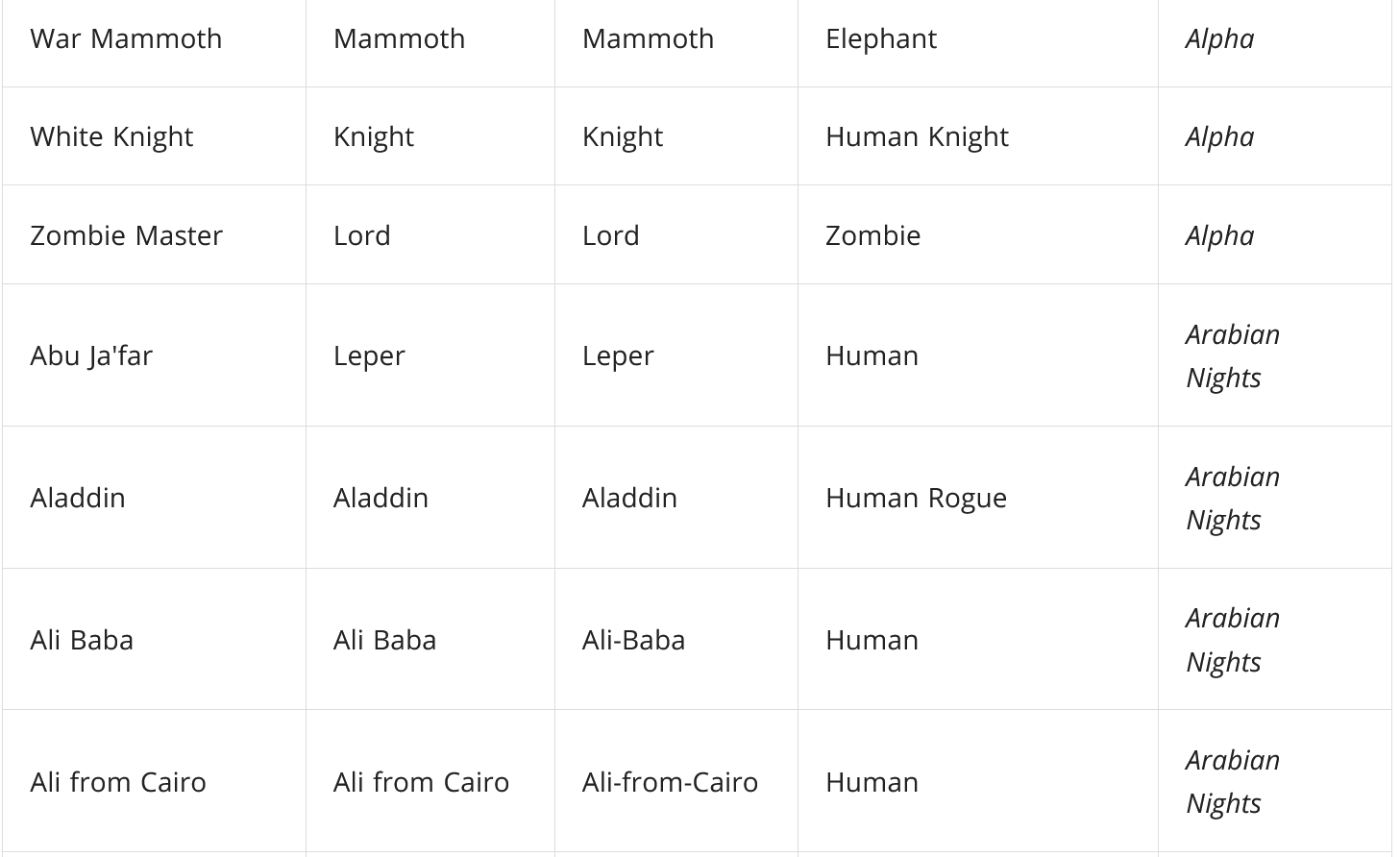
But there were survivors, strange renegade creatures that probably should’ve been obliterated but weren’t. And they tell a story that’s even more interesting.
Errata Escapees
In the post announcing the Grand Creature Type update, Gottlieb listed a few rationales for creature changes. The most telling had to do with “obsolescence”:
“Obsolete creature types were eliminated. A number of completely bizarre creature types were still on the books. Being? Entity? Gaea’s-Avenger? Gone, and their former owners now have more sensible types. In addition, there were a number of creature types that were too specific, and these have been folded into more standard types. For example, Erne and Vulture are now Bird, and Dragonfly and Ant are now Insect.”
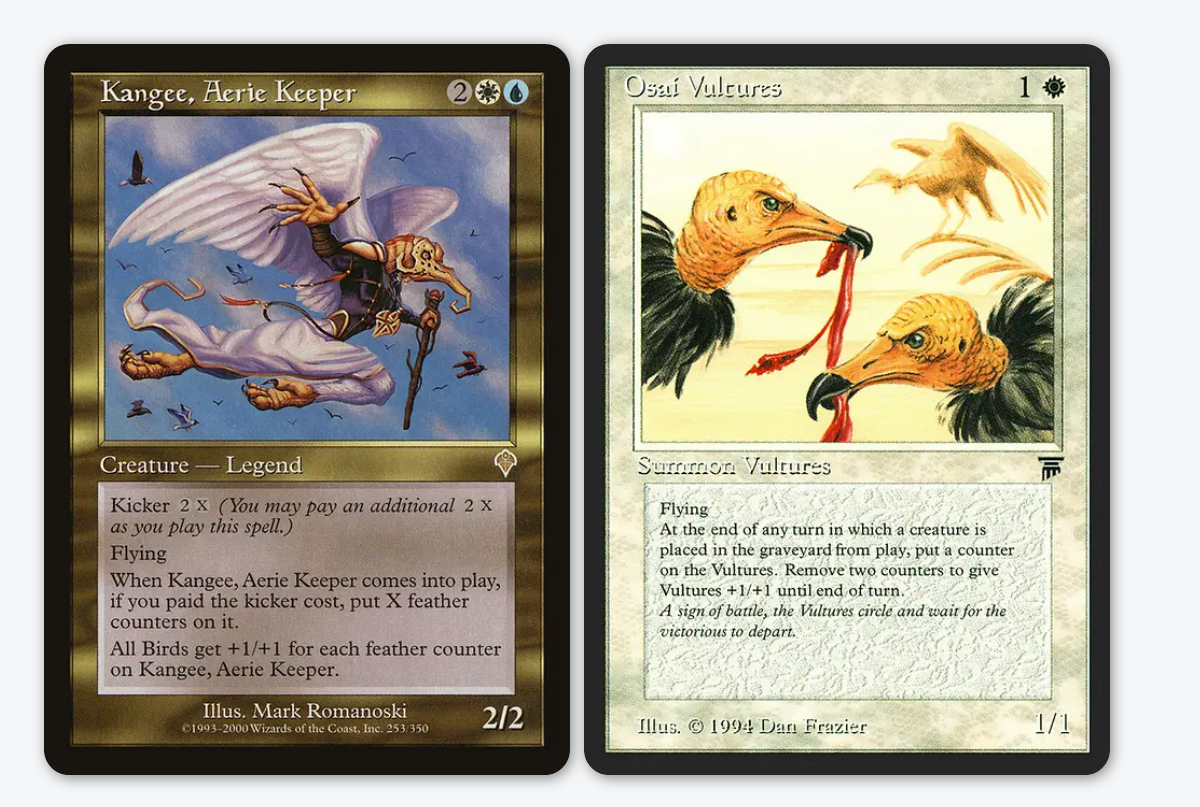
This update makes sense, I think: it helps ensure that the mechanical flavor intuitively matches mechanics. Shouldn’t Osai Vultures, originally printed as a Vulture, be buffed by Kangee, Aerie Keeper, which enhances all birds? (On the other hand, of course, there are some blips: would Soraya the Falconer, who originally buffed Falcons specifically, know how to handle any bird?)
Even despite the demolition of “Being” and “Entity” and the rest, there are more than a few marginal creature types that escaped the desert winds of obsolescence—and they’re often quite revealing of Magic’s history.
One of these types, one which I’m absolutely obsessed with, is Nightstalker.
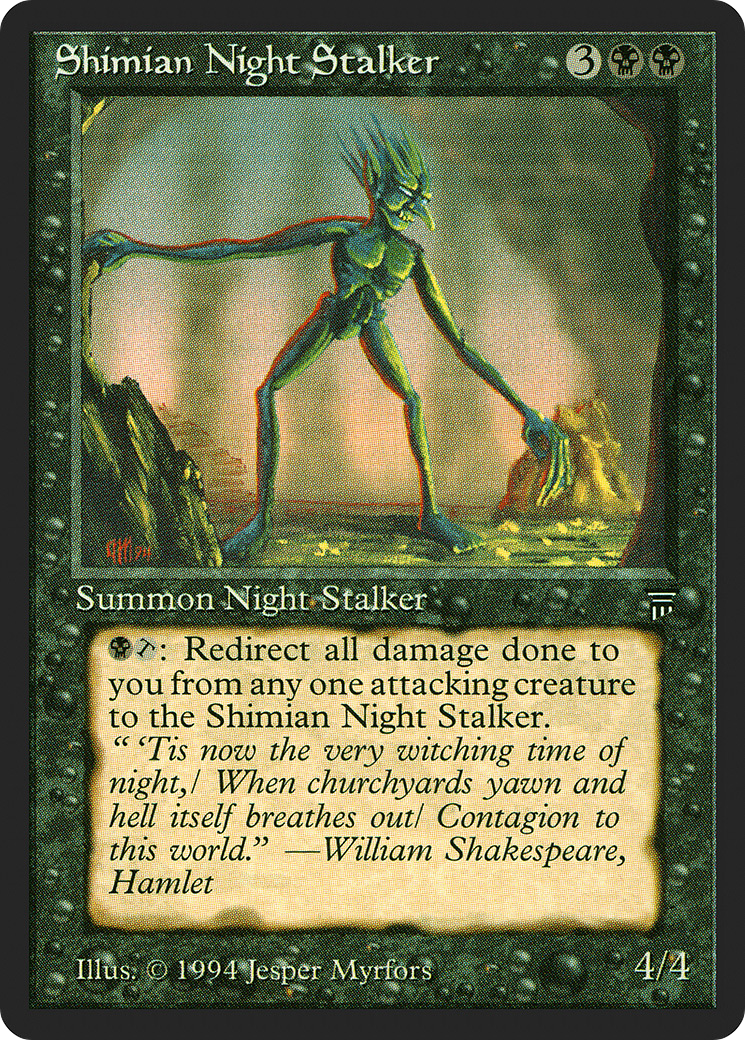
The first was Legends Shimian Night Stalker, a 3BB creature with a neat damage redirection ability and a neater Jesper Myrfors illustration (I’d kill for those legs). Given the aforementioned pre-Sixth Edition type line format, it wasn’t clear whether “Night Stalker” (with a space between the two words, keep in mind) was a species or a way of describing this leggy marvel.
Two years later, Mirage answered the question, kind of, by debuting three new Night Stalker—none of which looked like Shimian Night Stalker, none of which looked exactly like each other, and none of which had “Night Stalker” in their name.
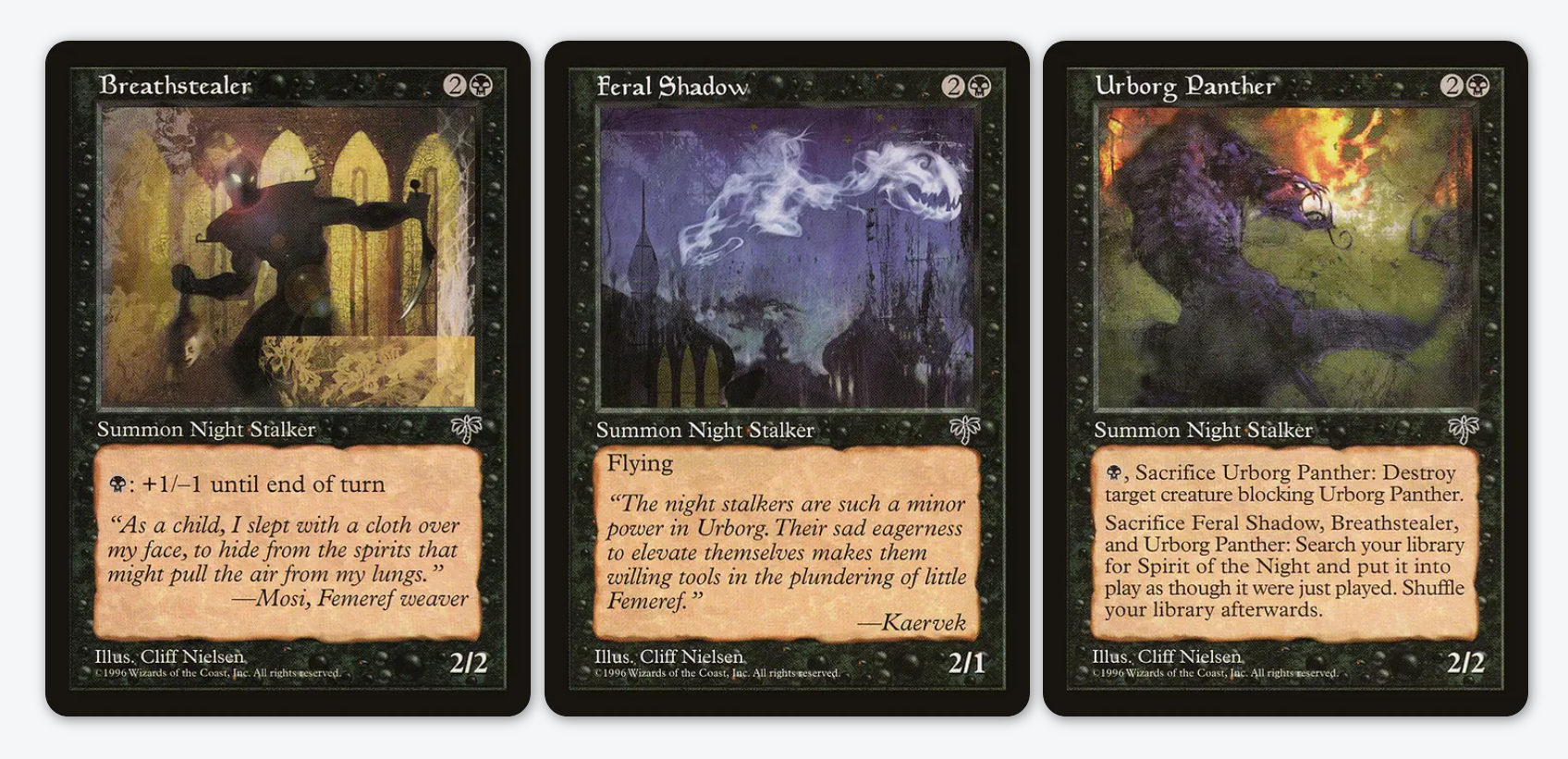
Each one is illustrated by Cliff Nielsen, but they’re visually disparate (one an assassin made of shadow, one an infernal panther, one a wispy trail of mist), and their background is unclear. The flavor text on Breathstealer and Feral Shadow implies that Night Stalkers are bad-dream demons of some sort hailing from the island of Urborg, and the set’s accompanying fiction clarifies that these specific Night Stalkers are members of the assassin cult the Breathstealers. The mechanics of Urborg Panther add a final dash of intrigue: the Night Stalkers are able to summon a powerful demon called the Spirit of the Night (which, as Mark Rosewater has explained, was originally called “Spirit of the Nightstalker”). This little trio gave some answers about what a Night Stalker was, but only barely.
The type got a final breath of life—plus a new name, “Nightstalker” sans space—in Portal Second Age (plus one teeny gasp in Prophecy), boasting eight cards illustrated by some of old-school Magic’s greatest artists.
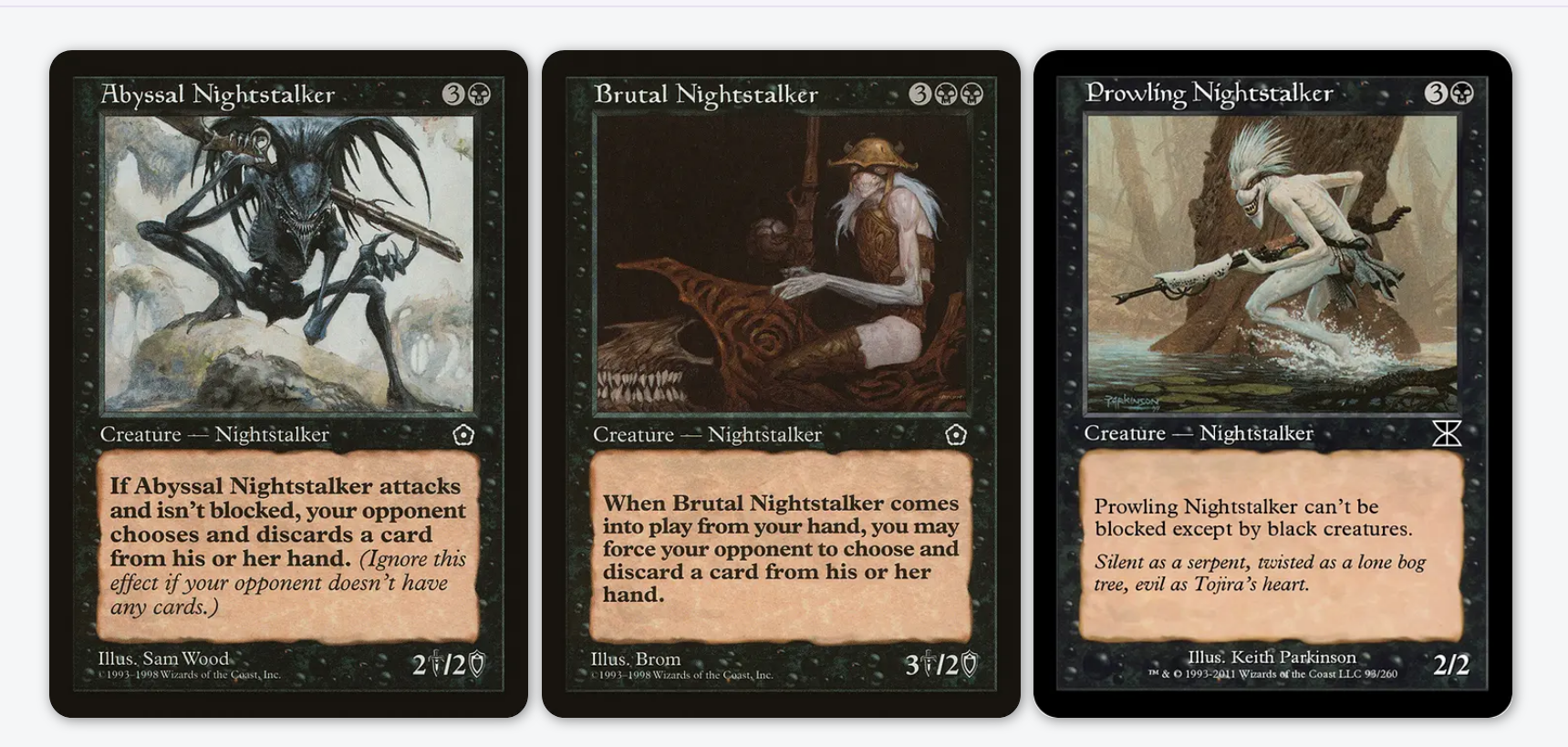
Here, Nightstalkers were conferred a slightly more coherent design: evoking Myrfors’ original, they are lanky and bestial and have long pointed faces, and in keeping with P02’s weird mix of high fantasy with steampunk technology, they tote rifles and ride strange mechanical walkers. Their incredibly sparse flavor text—there are less than 50 words of flavor between all of them—gives few hints about them besides the fact that they serve the malevolent Tojira and menace the White-aligend Alaborn. Still no answer: What IS a Nightstalker?
Why, you might ask, does the Nightstalker type still exist? There is no Nightstalker Lord or Nightstalker Anthem that gives a boon to all of them, so there seems little mechanical coherence among them. They have little more worldbuilding coherence: given their muddy ambiguity, it seems they might readily be called Demons, as other Black-aligned entities from Urborg are. Or they might even be called Horrors—a catch-all card type for creepy monsters, and one which, in fact, was retconned onto a whole ton of creatures in the Grand Update.
In fact, there seems to be perhaps one singular reason, mechanically at any rate, why the Nightstalker card type still exists: the ridiculously overcosted sorcery (and also the first-ever typal mass reanimation spell in all of Magic) Return of the Nightstalkers.
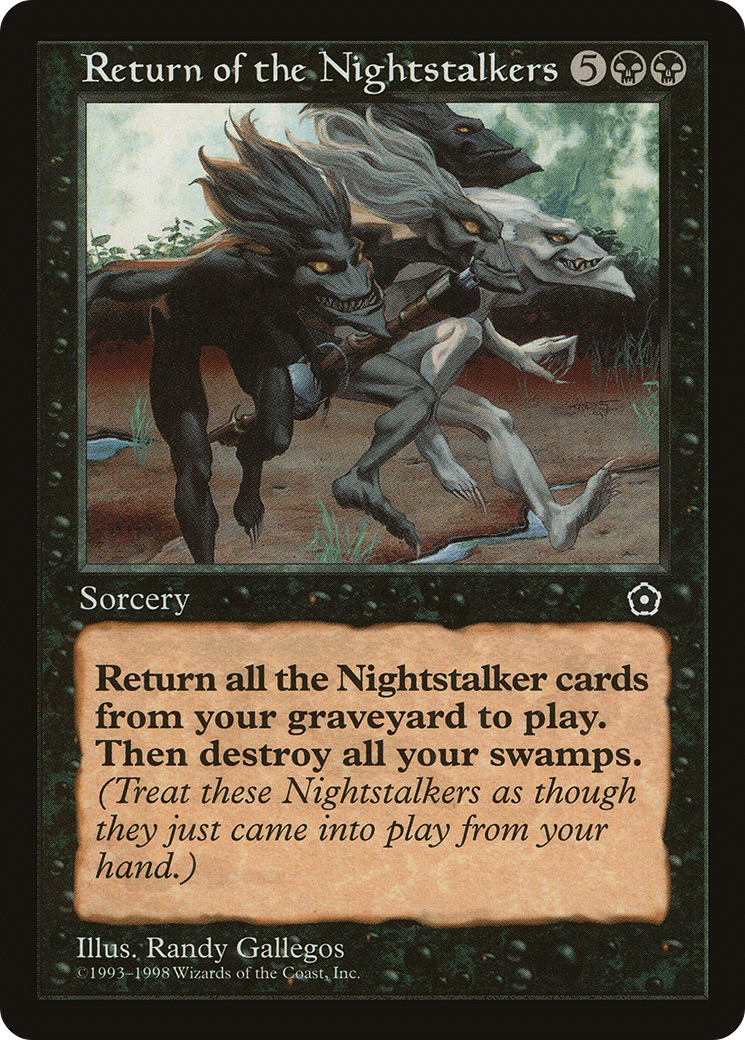
If you were to erase the Nightstalker creature type, you’d need to create another type for Return of the Nightstalkers to target (and even then, it’d be a tremendously worse version of Patriarch’s Bidding).
This wouldn’t be entirely unthinkable; certainly the Grand Creature Type Update had previously changed some creatures’ abilities. The aforementioned Goblin King, for example, was errata’d to say that “Other Goblins you control get +1/+1” (though, as a side note, this change meant that the card benefits from other Goblin typal effects, which is not how the creature was originally designed). Aysen Crusader was even weirder: the card initially buffed the long-forgotten Hero creature type (not to return until the advent of Marvel’s Spider-Man), and was changed to buff Soldiers and Warriors.
Such changes were fine enough, but evidently Return of the Nightstalkers was a step too far, likely because Wizards couldn’t find a way to change the Nightstalker type while also preserving the card’s mechanical clarity.
And so, by the grace of one awful card, Nightstalker survives as a creature type (in the archive, at any rate). And I, for one, am glad it does.
The type exists for the best reason, which is no good reason at all. Although Nightstalkers are basically meaningless from a modern mechanical perspective, they offer a glimpse into the foreign land that is late-90s Magic. Even more than that, they represent the purest kind of worldbuilding—worldbuilding that has somehow outsmarted the demands of power creep and remained purely and flavorful. The Nightstalkers are strange quasi-demonic entities that may prowl the swamps of Urborg and Dakkmor to this very day, and they refuse to be anything other than themselves. Rather than conform to players, they ask players to conform to them.
There are quite a few other creature types that have achieved similar dark bargains and that are similarly fertile with history.
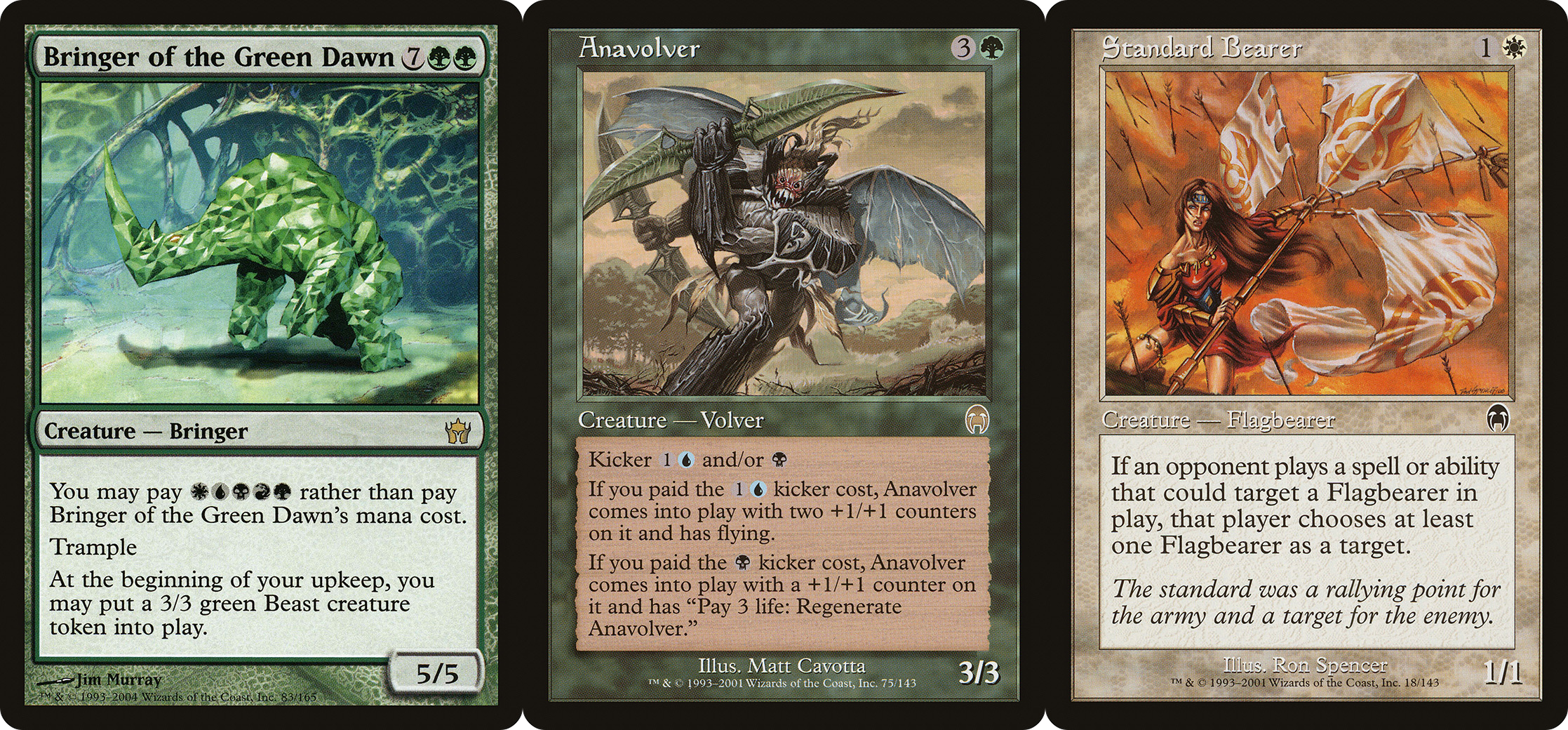
Bringer was a seemingly redundant creature type that united five Fifth Dawn creatures, each one the embodiment of one of Mirrodin’s suns (we’d likely now type them Avatars, and they’d simply belong together as a cycle). Similar is the Volver type from Apocalypse, which comprises a cycle of five mutated creatures that play into the set’s wedge-mana-matters theme. Also from Apocalypse are all two cards boasting the Flagbearer type, both designed with hilarious self-referential synergy. I love each of these types because they’re intractable to the retroactive force of modern design: they refuse to behave the same way that other types do, refuse to be captured by the logic of efficiency and coherence.
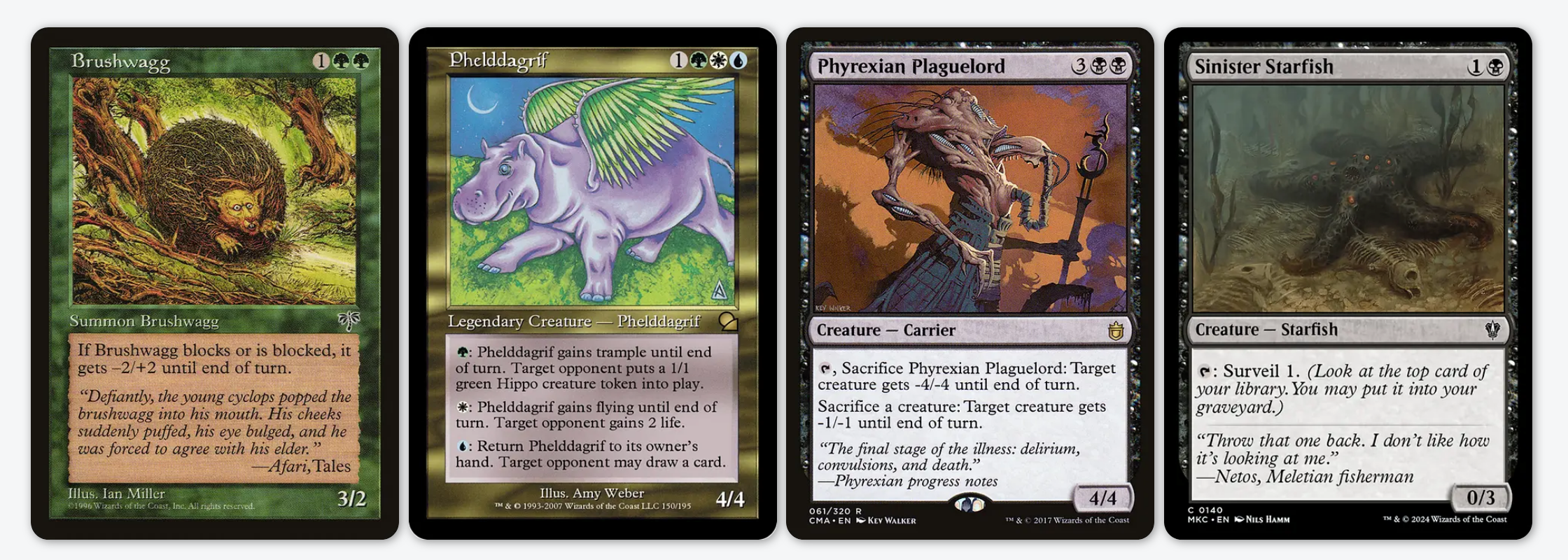
Although we’re unlikely to see more Bringers, Volvers, or Flagbearers, there’s more hope for Carriers and Brushwaggs and Starfish, who are all populated by fewer than 10 creatures but who have all seen reprints and even new additions in the last several years–some in nostalgia-oriented products like Modern Horizons, but some in “real” sets like Outlaws of Thunder Junction. Like one incredibly funny Magic writer whose work you should be reading, I hold out the same hope for Phelddagrifs. Their case is the inverse of the Nightstalkers’: rather than remain locked in the archives, some of these creature types can walk again; in them, there’s the thrilling sense that even history’s leavings are alive.
Indeed, as the afterlife of the Grand Creature Type Update demonstrates, no amendation is ever permanent. Gottlieb himself said as much in the debut article:
“And you know what? We probably didn’t do it perfectly. When you’re updating nearly 1200 cards, there are probably some things that slipped through the cracks. There are certainly issues that are ambiguous.”
In some cases, the GCTU erased certain creature types that were later brought back, or vice versa. “Anemone,” for example, was added for Glowing Anemone but then eliminated and bundled into “Jellyfish,” while the “Hyenas” type of Gibbering Hyenas was eliminated but later reintroduced as “Hyena.” Much this transformation, by the way, played off outside the cards’ boundaries: neither Glowing Anemone nor Gibbering Hyenas have ever been reprinted, so this cosmic nominalist drama was essentially hypothetical. The update is as much a shared fiction as an actual change.
On the other hand, some creature types began as fictions and then became realities.
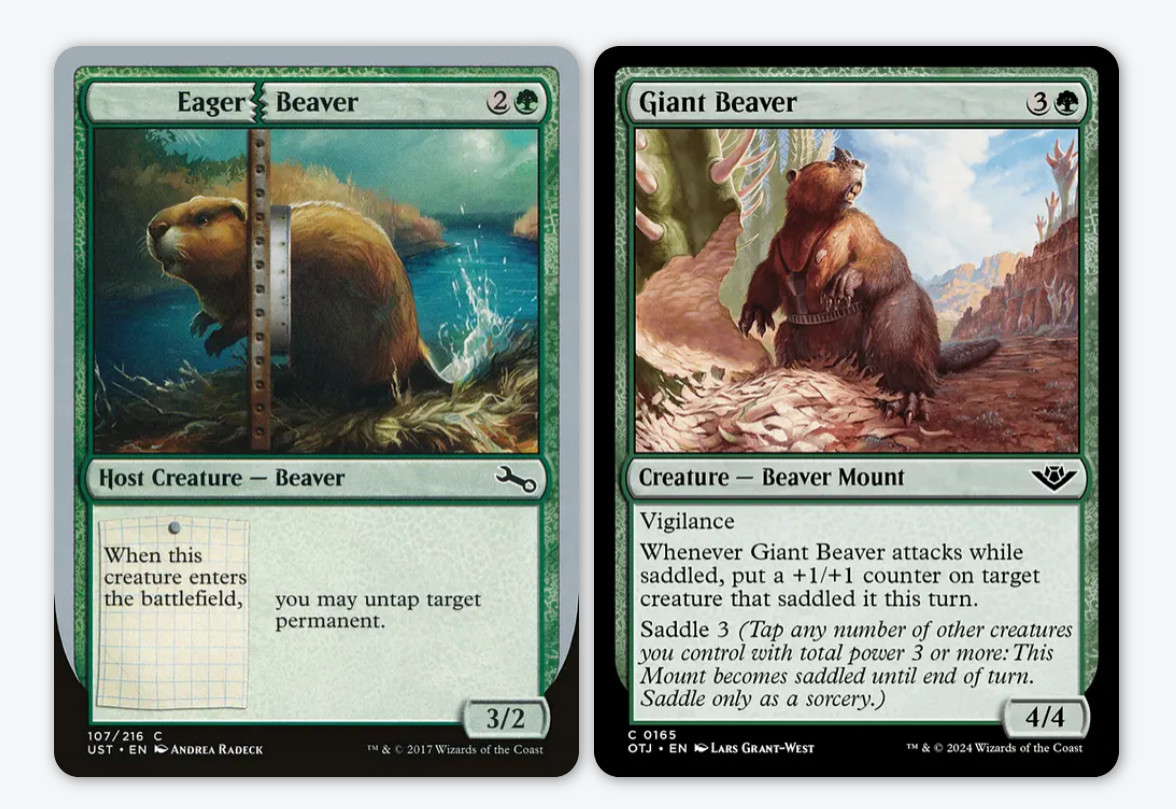
This is the case with numerous types that debuted in Un-sets, but were then eventually printed on regular Magic cards. Unhinged’s Eager Beaver scurried so that Thunder Junction’s Giant Beaver could scurry slightly faster, while Infinity’s Vegetation Abomination piloted the possibility that creatures, too, may be food. Indeed, Un-set type line innovations have been invaluable as Magic has expanded beyond conventional high fantasy: since the Robot creature type debuted in the jokey Unfinity, there have been over 130 “serious” Magic cards printed with the type, largely in Universes Beyond collaborations but some in-world, like those of Edge of Eternities.
At the same time, some types will probably not live to see daylight again.
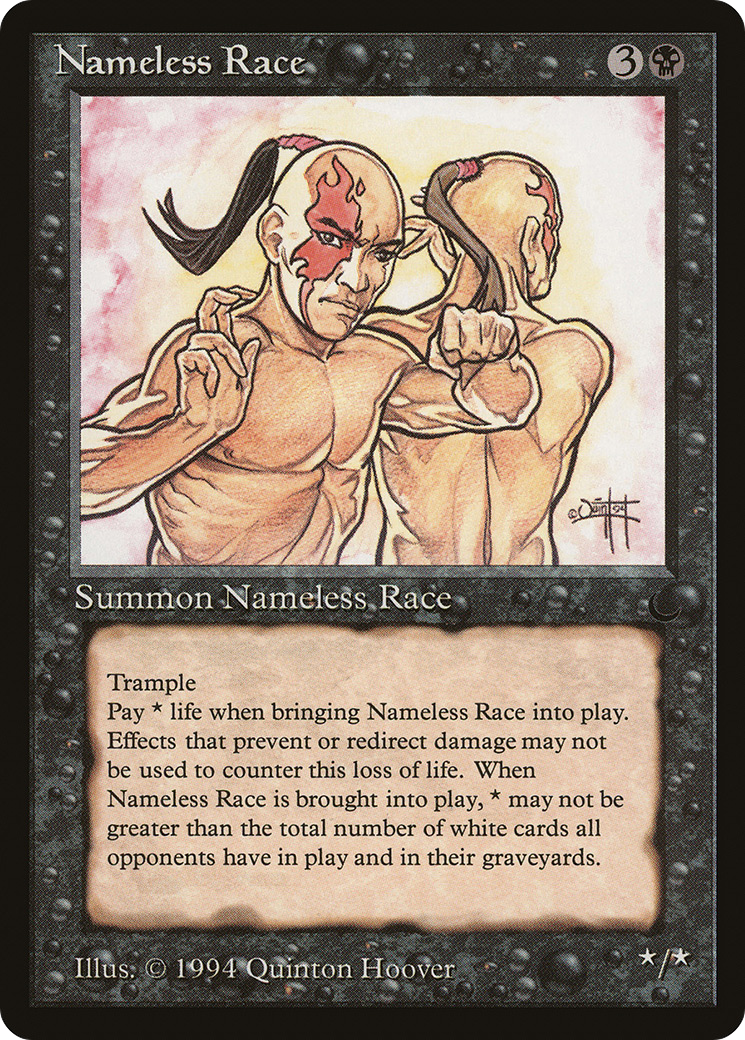
I suspect that Wizards will not be printing another member of the Nameless Race, the only creature in Magic with no creature subtype at all, aside from more art of a certain American animated character inspired by it.
All these micro-histories should interest us because they reveal the strange seams that knit Magic together. Creature typing has, from the beginning, been suspended between a matter of fantasy flavor and a matter of mechanical clarity. Should a creature that plainly is a Goblin be typed as a Goblin? Should a creature type with no mechanical purpose still be printed? Can a seemingly unserious type suddenly provide the infrastructure for hundreds of cards?
Such questions speak to the way that, beneath their veneer of unchangeable, indisputable authority, rules are always mutable—and always involve players’ imaginations more than we might think. Despite the apparent power and obvious necessity of a comprehensive rulebook, there will always be little sparks that flit through the fireplace grate—and that can birth whole new worlds unto themselves.
I’m reminded here of Gerard Manley Hopkins’ poem “Inversnaid,” one of my favorites. An ode to the roaring and unruly nature of Scotland, it ends like so:
“What would the world be, once bereft
Of wet and of wildness? Let them be left,
O let them be left, wildness and wet;
Long live the weeds and the wilderness yet.”
These lines capture the strange, beautiful oddness of the card types I’ve surveyed here. Unruly and resistant, and yet—as rendered in poetic language—harmonious, rhyming, sonorous, echoing. They refuse to be contained, and in their refusal they birth whole new worlds for us.
So here’s me, hoping to see another Nightstalker card printed in 2027—or not. Long live the woods and the wilderness yet.
Ryan Carroll (he/him) is a writer and Ph.D. candidate in English and Comparative Literature. On Substack as Dominarian Plowshare, he writes about Magic’s art, story, and experience. Outside of Magic, he writes on topics including 19th-century literature, information theory, television politics, and cliche.